The Sun may be moving into a quieter chapter, but 2026 and the years ahead can still bring unforgettable aurora displays. The secret is understanding how the pattern is changing.
For the past few years, the Northern Lights have felt almost headline-grabbing. Auroras have appeared farther south than usual, travellers have seen vivid displays across the Arctic, and “solar maximum” has become part of the aurora-chasing vocabulary.
So, now that the peak of the solar cycle appears to be passing, many travellers are asking the same question: have I missed my chance to see the Northern Lights?
The answer is reassuringly simple: no.
Solar maximum may be easing, but the aurora does not switch off. In fact, some of the most memorable displays can still occur after the peak of the solar cycle. What changes is not whether the Northern Lights appear, but where, how often, and under what conditions they are most likely to be seen.
NASA and NOAA announced in October 2024 that the Sun had reached the solar maximum period of Solar Cycle 25, the active phase of the Sun’s roughly 11-year cycle. Scientists also noted that the exact peak can only be confirmed after sustained decline is observed, meaning the story is more gradual than a single peak-and-finish moment.
Solar Maximum Explained
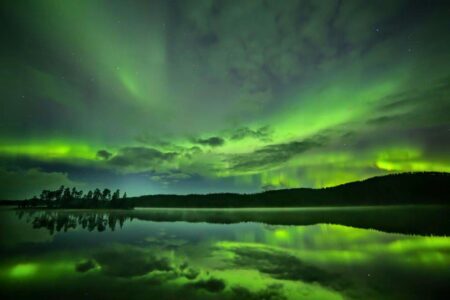
The Sun moves through an approximately 11-year cycle, shifting between quieter periods and more active periods. During solar maximum, sunspots, solar flares, and coronal mass ejections become more frequent. These eruptions can send charged particles toward Earth, where they interact with our magnetic field and upper atmosphere to create the aurora borealis.
During the most active years of Solar Cycle 25, those conditions helped push the aurora farther from the poles than many people expected. NASA has highlighted the May 2024 geomagnetic storm as the strongest at Earth in two decades, producing one of the most widespread aurora events in modern observing history.
But solar maximum is not the only time auroras happen.
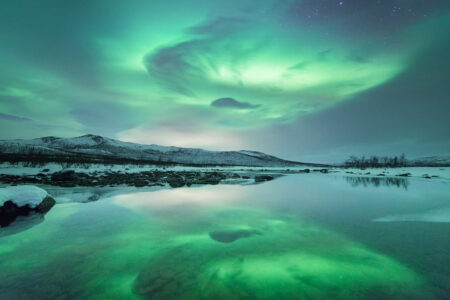
NOAA’s Space Weather Prediction Center explains that aurora exists nearly all the time somewhere on Earth. During quieter geomagnetic conditions, the auroral oval contracts closer to the poles. During stronger activity, it expands, brightens, and may become visible much farther south.
That distinction matters. The post-maximum years may bring fewer “surprise” aurora nights in lower-latitude locations, but in the right Arctic destinations, the Northern Lights remain a very real possibility.
What Changes After Solar Maximum?
Think of solar maximum as a period of increased opportunity, not as the only opportunity. After the peak, the Sun’s overall sunspot activity begins to trend downward, but space weather can remain lively.
The UK Met Office reported in January 2026 that solar maximum is “all-but-confirmed” to have taken place in 2024 and 2025, with the Sun now appearing to enter the declining phase of its cycle. Crucially, it also noted that the declining phase can still bring strong space-weather events and further aurora sightings.
NASA and NOAA have made the same point: significant storms can still occur during the declining phase of the solar cycle, even if they become less frequent overall.
In practical terms, the aurora pattern begins to shift. During solar maximum, big coronal mass ejections can create dramatic, far-reaching displays. As the cycle declines, aurora activity may become more dependent on recurring streams of solar wind, often linked to coronal holes. NOAA explains that coronal holes can release high-speed solar wind streams, which may buffet Earth for days and cause geomagnetic storming, usually in the minor to moderate range, though stronger events are possible.
For travellers, this means the years after solar maximum can be less about waiting for rare, continent-wide spectacles and more about choosing the right place, the right season, and enough time on the ground.
The Aurora Becomes More Location-Sensitive
At solar maximum, the Northern Lights sometimes reach places that rarely see them. After the peak, those lower-latitude surprises are less reliable. The best strategy is to travel into or close to the auroral oval: the ring-shaped zone around the polar regions where aurora activity is most frequent.
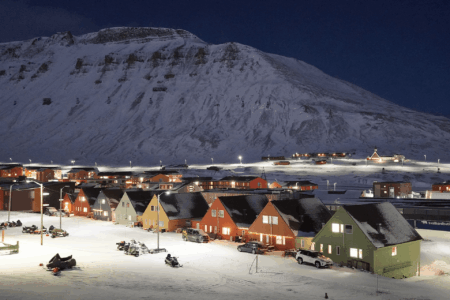
That is why destinations such as northern Norway, Swedish Lapland, Finnish Lapland, Iceland, Greenland, and Svalbard remain so important for aurora holidays. Aurora Nights specialises in tailor-made Northern Lights holidays across Sweden, Finland, Iceland, Greenland, and Norway, with itineraries designed around dark skies, expert guidance, and carefully selected Arctic accommodation.
Being in the right latitude means you do not need an extreme geomagnetic storm to have a chance of seeing the lights. A modest aurora that would be invisible from much of Europe can still shimmer overhead in the Arctic.
The Best Windows Still Matter
The Northern Lights need three things: solar activity, darkness, and clear skies. Solar activity may be entering a different phase, but the other two factors are still firmly within the traveller’s control.
Autumn, winter, and early spring remain the key viewing seasons in the northern hemisphere because the nights are long and dark. Around the equinox periods, particularly September and March, geomagnetic activity can also become more favourable due to seasonal effects in the way Earth’s magnetic field interacts with the solar wind.
For post-maximum aurora travel, this makes timing even more valuable. Instead of assuming every night will be active, it helps to build a trip around the strongest seasonal windows and allow several nights in one place.
How to Plan an Aurora Trip After Solar Maximum
The best post-maximum aurora strategy is simple: go north, stay longer, and prioritise dark-sky flexibility.
A short city break can be wonderful, but a Northern Lights-focused holiday benefits from time. Clouds, snow, moonlight, and changing solar-wind conditions can all affect visibility. Staying for several nights gives the sky more chances to align.
Accommodation also matters. Remote lodges, glass-roofed cabins, wilderness hotels, and properties with aurora alerts can make a significant difference, especially because the lights may appear late at night or in short bursts. The easier it is to step outside quickly, the better your chances of catching a display.
Guided aurora excursions can also improve the experience. Local guides understand weather patterns, light pollution, safe viewing areas, and live aurora data. In a post-maximum period, that knowledge becomes even more useful because the best display may depend on moving to clearer skies rather than simply waiting in one fixed location.
You Haven’t Missed the Moment
The end of solar maximum is not the end of the Northern Lights. It is the start of a new phase.
The coming seasons may bring fewer exceptionally southerly sightings, but the aurora will continue to appear across the Arctic. Some nights will be quiet. Others may surprise even seasoned observers. And during the declining phase of the solar cycle, strong space-weather events can still arrive.
For travellers, the message is clear: the Northern Lights are not over. They are becoming more selective.
That makes expert planning more important, not less. Choose the right Arctic destination, give yourself several nights, travel in the darker months, and let local knowledge guide the chase.
With Aurora Nights, your journey is designed around exactly that: the best locations, carefully chosen accommodation, expert-led experiences, and the flexibility to make the most of the skies you travel so far to see.