When to Go, Where to Stay and How to Plan a Swedish Lapland Aurora Holiday
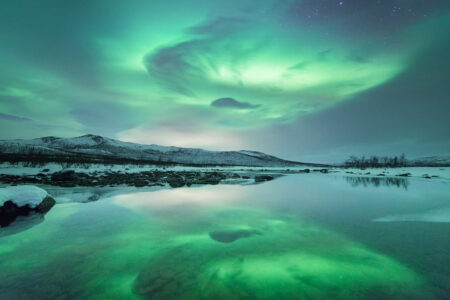
The best time to visit Sweden for the Northern Lights is between September and March, when the skies in Swedish Lapland are dark enough for the aurora borealis to be visible. For many travellers, the strongest months for a Sweden Northern Lights holiday are October to March, when the nights are long, the landscapes are wintry and the Arctic wilderness feels at its most atmospheric.
Sweden is one of the best destinations in Europe for a luxury Northern Lights holiday. In the far north, Swedish Lapland offers vast wilderness, frozen rivers, snow-covered forests, remote lodges, Sami culture, husky sledding, snowmobiling and some of Scandinavia’s most famous aurora-viewing locations.
For travellers who want to see the Northern Lights in Sweden, the key is to travel north. While aurora displays can occasionally be seen farther south during periods of strong solar activity, the best and most reliable experiences are usually found in Arctic Sweden, especially around Kiruna, Abisko, Jukkasjärvi and the wider Swedish Lapland region.
The Northern Lights are never guaranteed, but choosing the right month, staying for several nights and building your trip around dark skies, local expertise and flexible planning can significantly improve your chances.
Quick Answer: What Is the Best Month to See the Northern Lights in Sweden?
The best months to see the Northern Lights in Sweden are usually October to March. December, January and February offer the longest nights and the deepest winter atmosphere, while March can be one of the best months for travellers who want a balance of aurora potential, snow-covered landscapes and longer daylight hours for activities.
September can also be a good month, especially around Kiruna and Abisko, as the aurora season begins and the nights become dark again. However, for a classic snowy Swedish Lapland experience, December to March is usually the strongest period.
When Is the Northern Lights Season in Sweden?
Northern Lights season in Sweden usually runs from September to late March, with sightings sometimes possible into early April in the far north. The aurora can occur throughout the year, but it needs darkness to be visible. This is why summer is not suitable for Northern Lights travel in Sweden, even though aurora activity may still be happening above the Earth’s atmosphere.
In Swedish Lapland, the first aurora sightings often begin in early autumn as the nights return. As winter deepens, the long Arctic nights create more hours of darkness, giving travellers more opportunities to see the sky come alive.
For the best chance of seeing the Northern Lights in Sweden, plan a trip between autumn and early spring, stay away from light pollution, and spend several nights in or around Sweden’s Arctic region.
Why Sweden Is One of the Best Places to See the Northern Lights
Sweden is a superb Northern Lights destination because its Arctic region combines strong aurora potential with exceptional wilderness experiences and high-quality accommodation.
A Swedish Lapland holiday can include:
- Remote lodges and wilderness hotels
- ICEHOTEL in Jukkasjärvi
- Abisko National Park
- Aurora Sky Station
- Husky sledding
- Snowmobiling
- Reindeer encounters
- Sami cultural experiences
- Arctic dining
- Sauna and cold-water rituals
- Snowshoeing and forest walks
- Private guiding and tailored excursions
Sweden is especially appealing for travellers who want their aurora holiday to feel calm, refined and deeply connected to nature. The landscapes are vast and quiet, the experiences are immersive, and the sense of space is extraordinary.
Month-by-Month Guide to Visiting Sweden for the Northern Lights
September in Sweden
September marks the beginning of the Northern Lights season in Swedish Lapland. Around Kiruna, Abisko and the far north, the skies begin to darken again after the long summer days, making aurora sightings possible.
This is a good month for travellers who want a softer, autumnal version of Swedish Lapland. The landscapes are not yet in full winter, but the forests and fells begin to shift into rich seasonal colour. September can work well for hiking, photography, quiet wilderness stays and early-season aurora watching.
Why visit Sweden in September:
- The Northern Lights season begins in the far north
- Autumn colours bring a beautiful atmosphere to Swedish Lapland
- Daylight remains good for exploring
- Weather is often milder than in deep winter
- Ideal for travellers who do not need a full snow-covered experience
September is best for those who want an early aurora-season trip with autumn landscapes rather than classic winter scenery.
October in Sweden
October is one of the best shoulder-season months to visit Sweden for the Northern Lights. The nights are longer than in September, the landscapes feel increasingly Arctic, and the region is quieter than the peak winter travel period.
Snow may begin to appear in parts of Swedish Lapland, although conditions vary from year to year. This is a strong month for travellers who want good aurora potential without the deepest winter cold.
Why visit Sweden in October:
- Longer nights for aurora viewing
- Quieter than peak winter months
- Strong shoulder-season value
- Atmospheric landscapes and changing weather
- Good for private touring, photography and wilderness stays
October is a good option for travellers who want a balance of dark skies, seasonal atmosphere and fewer visitors.
November in Sweden
November is when winter begins to take hold in Swedish Lapland. The days shorten, snow becomes more likely and the Arctic atmosphere becomes stronger.
For Northern Lights travellers, November offers longer nights and a growing sense of winter. It is often quieter than December to February, making it appealing for those who prefer a more peaceful experience.
Some winter activities may begin depending on snow conditions, though the full winter activity season is usually stronger later in the year.
Why visit Sweden in November:
- Longer nights for aurora watching
- Increasing chance of snow
- Quieter pre-Christmas travel period
- Strong winter atmosphere
- Good for travellers who want a less crowded Arctic escape
November is best suited to travellers who want early winter atmosphere and aurora potential, with the understanding that snow conditions can vary.
December in Sweden
December is one of the most magical months to visit Swedish Lapland. The nights are long, the landscapes are usually snowy, and the atmosphere feels deeply festive and remote.
This is also the month when the seasonal ICEHOTEL in Jukkasjärvi becomes a major highlight, with hand-sculpted ice suites, Arctic art and a setting close to Kiruna. For many travellers, combining ICEHOTEL with a remote lodge stay creates one of the most memorable luxury Northern Lights holidays in Sweden.
Why visit Sweden in December:
- Long hours of darkness for aurora viewing
- Festive winter atmosphere
- Snow-covered landscapes
- ICEHOTEL winter season begins
- Ideal for romantic escapes, honeymoons and special occasions
December is perfect for travellers who want a magical winter holiday with strong Northern Lights appeal, but daylight hours are limited, so the itinerary should be carefully paced.
January in Sweden
January is deep winter in Swedish Lapland. It is one of the darkest and coldest months of the year, but also one of the most atmospheric.
The long nights create extended opportunities for aurora viewing, while the snow-covered wilderness offers a true Arctic experience. This is an excellent month for husky sledding, snowmobiling, reindeer encounters, sauna rituals and evenings spent watching for the Northern Lights.
Why visit Sweden in January:
- Long Arctic nights for aurora viewing
- Deep winter landscapes
- Excellent snow conditions for winter activities
- Strong wilderness atmosphere
- Ideal for travellers who want a true Arctic experience
January is best for those who are comfortable with cold conditions and want Swedish Lapland at its most dramatic.
February in Sweden
February is one of the best months to visit Sweden for a Northern Lights holiday. The nights remain dark, but daylight begins to return, creating a better balance between aurora viewing and daytime activities.
This is a strong month for travellers who want to experience Swedish Lapland in full winter while still having enough daylight for husky sledding, snowmobiling, snowshoeing, ice dining and exploring the wilderness.
Why visit Sweden in February:
- Strong Northern Lights potential
- Excellent winter activity conditions
- More daylight than December and January
- Snow-covered scenery remains beautiful
- Ideal balance of adventure and comfort
February is often one of the most practical and rewarding months for a luxury Sweden aurora holiday.
March in Sweden
March is one of the best months to visit Swedish Lapland for travellers who want a balance of Northern Lights potential, winter landscapes and longer days.
The nights are still dark enough for aurora watching, while the daylight hours make it easier to enjoy outdoor experiences. March can feel brighter, more open and more comfortable than the deepest winter months, without losing the magic of snow-covered Arctic scenery.
Why visit Sweden in March:
- Excellent balance of darkness and daylight
- Strong aurora potential
- Good snow conditions in Swedish Lapland
- More comfortable daytime touring
- Ideal for photography, families and first-time Arctic travellers
March is one of the strongest all-round months for a Sweden Northern Lights holiday.
April in Sweden
April sits at the edge of the Northern Lights season in Sweden. In the far north, sightings may still be possible in early April, but the nights are becoming shorter and lighter.
This can be a beautiful time for spring-winter travel in Swedish Lapland. The days are longer, the temperatures may feel more comfortable, and snow can still be present in many northern areas. However, if the Northern Lights are your main priority, earlier months usually offer better conditions.
Why visit Sweden in April:
- Possible late-season aurora sightings in the far north
- Longer daylight hours
- Softer spring-winter conditions
- Good for travellers who want outdoor activities with less severe cold
- Best when the aurora is a bonus rather than the sole focus
For a dedicated Northern Lights holiday, choose September to March. For a bright late-winter escape with a chance of aurora, early April can still be considered.
Can You See the Northern Lights in Sweden in Summer?
You usually cannot see the Northern Lights in Sweden in summer because the skies are too bright. In Swedish Lapland, the midnight sun brings long daylight hours, especially around June and July, making aurora viewing impossible even if solar activity is taking place.
Summer in Swedish Lapland is still beautiful, but it is a completely different kind of trip. Instead of aurora nights, travellers can experience hiking, river adventures, wildlife, fishing, mountain scenery and the midnight sun.
Choose summer in Sweden for:
- Midnight sun
- Hiking
- River rafting
- Wildlife and nature
- Long daylight hours
- Remote lodge stays
- Arctic landscapes without winter conditions
Choose autumn, winter or early spring if your priority is seeing the Northern Lights.
Best Places to See the Northern Lights in Sweden
The best places to see the Northern Lights in Sweden are in the far north, especially in Swedish Lapland. The most famous aurora destinations include Abisko, Kiruna, Jukkasjärvi and remote wilderness areas away from artificial light.
Abisko
Abisko is one of the most famous Northern Lights locations in Sweden. Located in Swedish Lapland, close to the Norwegian border, Abisko is known for its dark skies, mountain scenery and strong aurora reputation.
The Aurora Sky Station on Mount Nuolja is one of the best-known aurora experiences in the region. Travellers can take an evening visit to the station for open views, guided interpretation and a memorable setting for watching the night sky.
Abisko is ideal for travellers who want one of Sweden’s most established aurora-viewing destinations.
Kiruna
Kiruna is the main gateway to many Northern Lights holidays in Swedish Lapland. It offers access to wilderness lodges, Arctic activities, Sami experiences and nearby aurora locations.
Kiruna works well as part of a wider itinerary, especially when combined with Abisko, Jukkasjärvi or remote lodge stays. It is also a practical arrival point for travellers flying or taking the train into the far north.
Jukkasjärvi
Jukkasjärvi is best known as the home of ICEHOTEL, one of Sweden’s most iconic Arctic experiences. Staying here can be a highlight of a Northern Lights holiday, especially for travellers who want a memorable combination of design, art, ice architecture and winter adventure.
Jukkasjärvi is close to Kiruna and works well as part of a luxury Swedish Lapland itinerary.
Swedish Lapland Wilderness Lodges
Some of the best Northern Lights experiences in Sweden happen far from towns, in remote wilderness lodges where the sky is dark and the surroundings are quiet.
These lodges are ideal for travellers who want a slower, more immersive experience. Days can be spent dog sledding, snowshoeing, snowmobiling or meeting local guides, while evenings are kept open for aurora watching.
Arctic Bath and Harads
The Harads region is known for distinctive design-led accommodation and Arctic wellness experiences, including stays that combine forest, river, spa and Northern Lights potential. This area is ideal for travellers who want Swedish Lapland with a strong design and wellbeing focus.
How Many Nights Should You Stay in Sweden to See the Northern Lights?
For the best chance of seeing the Northern Lights in Sweden, stay for at least four to seven nights in Swedish Lapland. A longer stay gives you more opportunities for clear skies and favourable aurora activity.
A short two- or three-night trip can be successful, but it leaves less room for weather variation. The Northern Lights depend on darkness, clear skies and solar activity, so additional nights improve your chances.
For a luxury Swedish Lapland itinerary, five to seven nights is often ideal. This allows time for a mix of aurora viewing, wilderness activities, cultural experiences, relaxation and travel between locations.
What Conditions Do You Need to See the Northern Lights in Sweden?
To see the Northern Lights in Sweden, you need three main conditions:
- Darkness
- Clear skies
- Aurora activity
Darkness is why September to March is the main viewing season. Clear skies are essential because cloud cover can block the aurora. Aurora activity depends on solar wind and geomagnetic conditions.
The best itineraries are designed with flexibility. If one night is cloudy, there should be another opportunity. If aurora forecasts improve, your evening can be adjusted. If you are staying somewhere remote, you may be able to step outside quickly when the lights appear.
Is Sweden Good for a Luxury Northern Lights Holiday?
Sweden is excellent for a luxury Northern Lights holiday because it offers a rare combination of wilderness, design, comfort and Arctic authenticity.
A luxury Sweden aurora holiday can include:
- Boutique wilderness lodges
- ICEHOTEL stays
- Private transfers
- Guided aurora experiences
- Husky sledding
- Snowmobiling
- Reindeer and Sami cultural experiences
- Arctic fine dining
- Sauna and cold-water bathing
- Design-led accommodation
- Tailor-made multi-destination itineraries
Sweden is particularly well suited to travellers who want space, silence and understated luxury. It is less about spectacle for spectacle’s sake and more about immersion: fireside dinners, snow-covered forests, frozen rivers and the possibility of the aurora appearing overhead.
Best Time to Visit Sweden
Best Time for Northern Lights
Visit Swedish Lapland between September and March. For the best combination of aurora potential and winter atmosphere, consider December to March.
Best Time for Snowy Landscapes
December to March is usually best for snow-covered scenery in Swedish Lapland. January and February are especially strong for deep winter atmosphere.
Best Time for ICEHOTEL
The seasonal winter ICEHOTEL in Jukkasjärvi is usually open from December to April. ICEHOTEL 365 offers an ice experience year-round, but winter is the classic time to visit.
Best Time for Husky Sledding
Husky sledding is usually best during the snowy winter months, typically from December to March, depending on conditions.
Best Time for Families
February and March are often excellent for families because there is more daylight than in mid-winter, while winter activities and aurora opportunities remain strong.
Best Time for Honeymoons and Romantic Trips
December to March is ideal for romantic Swedish Lapland holidays, especially when combining a remote lodge, ICEHOTEL, private guiding and Northern Lights evenings.
Best Time for Fewer Crowds
September, October, November and March can be good options for travellers who want a quieter experience than the busiest winter weeks.
Frequently Asked Questions About Seeing the Northern Lights in Sweden
What is the best month to see the Northern Lights in Sweden?
The best months to see the Northern Lights in Sweden are usually October to March. February and March are especially good for travellers who want a balance of dark skies, snow conditions and enough daylight for activities.
Can you see the Northern Lights in Stockholm?
It is very rare to see the Northern Lights in Stockholm. During strong geomagnetic storms, sightings may occasionally be possible farther south, but for a proper aurora holiday, you should travel to Swedish Lapland.
Is Abisko the best place in Sweden to see the Northern Lights?
Abisko is one of the best-known places in Sweden for Northern Lights viewing because of its northern location, dark skies and established aurora experiences such as Aurora Sky Station.
Is Kiruna good for the Northern Lights?
Yes, Kiruna is a strong base for Northern Lights holidays in Sweden. It provides access to Swedish Lapland, ICEHOTEL, wilderness lodges, Sami experiences and guided aurora excursions.
Are the Northern Lights guaranteed in Sweden?
No, the Northern Lights are never guaranteed. They depend on darkness, clear skies and aurora activity. Staying for several nights in Swedish Lapland improves your chances.
Can you see the Northern Lights in Sweden in December?
Yes, December is a good month to see the Northern Lights in Swedish Lapland because the nights are long and dark. It is also a very atmospheric time to visit, especially for winter landscapes and festive travel.
Is March a good time to see the Northern Lights in Sweden?
Yes, March is one of the best months for a Sweden Northern Lights holiday. The nights are still dark enough for aurora viewing, while the days are longer and often better for outdoor activities.
How cold is Swedish Lapland in winter?
Swedish Lapland can be very cold in winter, particularly in January and February. Temperatures vary depending on location and weather conditions, but proper clothing, expert planning and comfortable accommodation make the experience much easier to enjoy.
Is Sweden or Iceland better for the Northern Lights?
Both Sweden and Iceland can be excellent for the Northern Lights, but they offer different experiences. Sweden is ideal for snowy forests, remote lodges, ICEHOTEL, husky sledding, Sami culture and a deep Arctic wilderness atmosphere. Iceland is ideal for volcanoes, glaciers, black sand beaches, geothermal lagoons and dramatic coastal landscapes.
Final Recommendation: When Should You Visit Sweden?
The best time to visit Sweden for the Northern Lights is from September to March. For most travellers, December to March offers the strongest combination of dark skies, snow-covered landscapes, Arctic activities and luxury winter experiences.
- Choose September or October if you want early-season aurora potential, autumn landscapes and a quieter atmosphere.
- Choose December or January if you want long nights, deep winter scenery and a magical festive Arctic experience.
- Choose February or March if you want one of the best balances of Northern Lights potential, snow conditions, daylight and daytime adventure.
- Choose summer if you want midnight sun, hiking, river adventures and wilderness without winter conditions, but not if your main goal is to see the aurora.
At Aurora Nights, we design tailor-made Sweden Northern Lights holidays around the way you want to travel. From Abisko and Kiruna to ICEHOTEL, remote lodges, husky sledding, Arctic dining and private aurora experiences, every itinerary is carefully planned to give you the best possible experience of Swedish Lapland’s extraordinary winter skies.