There is a point in the Nordic year when summer quietly gives way and the landscape begins to change almost by the day.
Across Finland, Sweden and Norway, the forests turn through shades of gold, copper, amber and deep red. Birch leaves brighten almost overnight, low shrubs and ground cover take on richer autumn colours and the first cooler mornings begin to settle across the lakes and valleys.
In Finland, this short but spectacular season is known as ruska.
It is one of the most atmospheric times to experience the North.
Autumn colour across the Nordic landscape
Ruska is most closely associated with Finnish Lapland, where the forests, fells and lakes can become surrounded by extraordinary autumn colour.
The transformation is particularly striking around the water.
On a still September morning, the surface of a lake can be almost completely flat, reflecting the forests so clearly that it becomes difficult to tell where the trees finish and their reflection begins. Gold and rust coloured birches line the shoreline, darker evergreens sit behind them and distant fells add another layer to the landscape.
There is often very little movement.
A small ripple from a bird or the wake of a passing canoe can be enough to break the reflection.
That quietness is part of what makes autumn here feel so different from summer or winter.
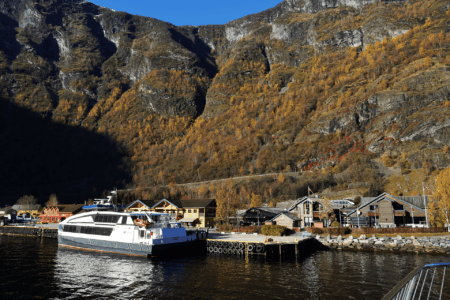
Further west, similar colours spread through Swedish Lapland and northern Norway. Valleys turn golden, mountain slopes become streaked with red and orange vegetation and forests begin their gradual transition towards winter.
The exact timing varies according to location, altitude and weather, but September is usually the month when autumn becomes impossible to miss.
A hint of winter in the air
Ruska also brings the first real suggestion that winter is on its way.
Mornings can feel noticeably cooler, particularly beside lakes and rivers. The air becomes sharper and fresher and there can be a thin mist sitting over the water before the day begins to warm.
During the afternoon, temperatures can still be comfortable enough for walking, hiking and spending long periods outside, but by evening you may find yourself reaching for another layer.
It is this contrast that makes early autumn particularly enjoyable.
You can spend the day walking through colourful forests, exploring trails or sitting beside a lake without the extreme cold of midwinter. Then, as evening arrives, the temperature drops, the light fades and the landscape feels increasingly Arctic.
There might even be the first dusting of snow across the highest peaks.
Darker nights return
For anyone travelling north in search of the Northern Lights, ruska arrives at an important point in the year.
After the long days of Nordic summer, darkness begins to return.
By September, nights across much of the northern Nordics are becoming dark enough for the Aurora to be visible again. You have the colour of autumn during the day and the possibility of another type of colour appearing in the sky after sunset.
It can make September feel like two seasons at once.
During daylight hours, the landscape is filled with gold, orange and red. After dark, attention turns upwards.
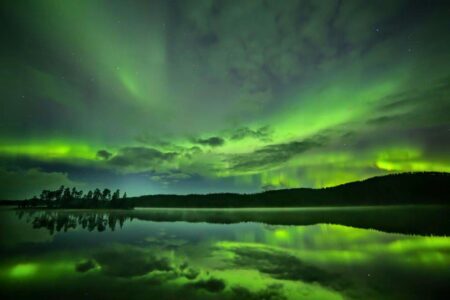
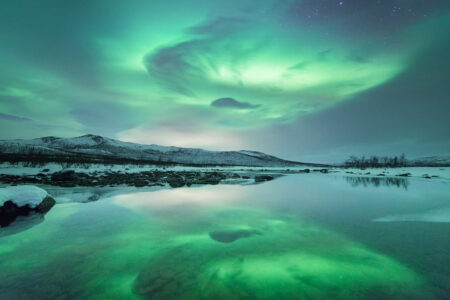
On a clear evening, stars begin to appear over the forests and lakes. If conditions are right, the Northern Lights can develop above the horizon, sometimes reflected in the same calm water that mirrored the autumn colours only a few hours earlier.
There is something particularly beautiful about seeing the Aurora before winter snow completely changes the landscape.
Instead of white forests and frozen lakes, you see open water, dark hills and autumn trees beneath the night sky.
Quieter days in the North
Another attraction of the ruska season is simply how peaceful it can feel.
The main summer travel period has passed, while the busiest winter months are still ahead.
Trails can be quieter. Lakeshores can feel almost empty. There is more time to notice the smaller details of the landscape, from berries growing beside woodland paths to the changing colour of the leaves.
It is an ideal season for gentle outdoor experiences.
Walking and hiking are particularly rewarding during ruska, with cooler temperatures and changing scenery. Canoeing and kayaking offer a completely different perspective, especially when the water is still enough to reflect the surrounding forests.
There are also opportunities for foraging, photography, sauna experiences and long evenings around a fire before heading outside to look at the sky.
In some locations, the absence of deep snow also means you can explore areas that feel entirely different later in the winter.
Before the snow arrives
Ruska never lasts for long.
That is part of its appeal.
A few weeks later, the leaves begin to fall, temperatures drop further and the first persistent snow starts to transform the landscape again.
Lakes that reflected autumn forests will eventually freeze. Walking trails will disappear beneath snow. Skis, snowmobiles and sleds will replace hiking boots and canoes.
But before that happens, there is this brief period when the North sits somewhere between summer and winter.
The days still hold colour and warmth. The nights are becoming darker. The air carries the first hint of cold.
For Northern Lights travellers, it offers a very different way to experience the Nordic autumn.
Ruska brings colour to the forests, reflections to the lakes and a sense that the seasons are beginning to turn.
And when darkness finally settles in each evening, there is always the possibility of one more colour appearing overhead.