There are few places where winter changes the rhythm of a destination as dramatically as Svalbard. Each autumn, the days shorten quickly until the sun slips below the horizon and does not return for months.
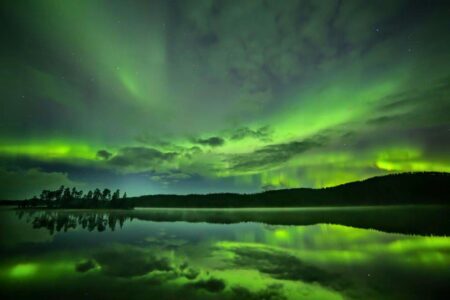
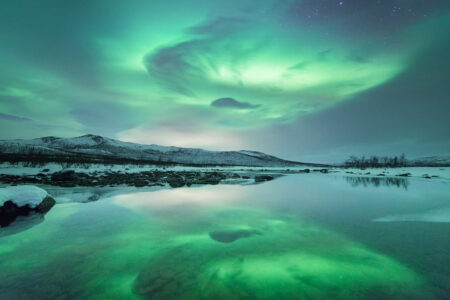
What follows is the dark season, including the extraordinary Polar Night, when Longyearbyen becomes one of the most unusual places in the world to experience the Northern Lights.
When does the sun set for the last time in Svalbard in 2026?
In Longyearbyen, Svalbard’s main settlement, the sun will set for the final time of 2026 on 26th October at approximately 12.09pm local time. It will not rise again the following day.
The exact dates vary slightly across the Svalbard archipelago, but Longyearbyen is generally used as the reference point. Visit Svalbard describes the dark season as lasting from 26 October until 16 February, when the sun remains below the horizon throughout the day.
That does not mean Svalbard immediately disappears into complete darkness. During the first weeks there is still twilight around the middle of the day. The light becomes softer and bluer, brushing the mountains and snow with shades of pink, violet and deep blue.
What is the Polar Night?
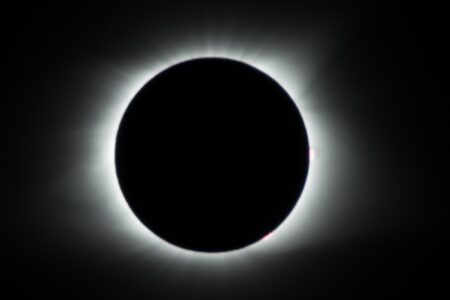
The Polar Night is a natural phenomenon experienced in the polar regions during winter, when the sun does not rise above the horizon.
In Svalbard, the deepest part of the dark season is known as the Civil Polar Night. It lasts from around 14th November until 29 January, when the sun remains at least six degrees below the horizon.
Even then, Polar Night is not simply blackness. Moonlight can illuminate the snow covered mountains, stars become more prominent and a faint glow can sometimes appear around midday. Longyearbyen’s lights shine against the surrounding Arctic landscape, while away from the settlement the darkness becomes far more complete.
Northern Lights during the day
One of the most remarkable things about the Polar Night in Svalbard is that the Northern Lights do not necessarily have to wait until evening.
The sky can remain dark enough for the Aurora to appear during what would normally be daytime. You might be outside beneath the stars in the morning or look towards the sky in the afternoon and see green light beginning to move overhead.
The long hours of darkness also create an atmospheric setting for dog sledding, snowmobiling, ice cave adventures and time in the Arctic wilderness.
Where else can you experience the Polar Night?
The Polar Night occurs in the polar regions, north of the Arctic Circle and south of the Antarctic Circle. The further towards the poles you travel, the longer the sun remains below the horizon.
In Northern Norway, destinations including Tromsø, Alta, Kirkenes and the North Cape experience periods when the sun does not rise during winter. It can also be experienced in the far north of Sweden and Finland, as well as Arctic regions of Greenland, Canada, Alaska and Russia.
Svalbard offers one of its most dramatic versions. Sitting between mainland Norway and the North Pole, the archipelago experiences a dark season lasting well over three months.
Why experience Svalbard during the Polar Night?
Travelling to Svalbard during the Polar Night is about more than seeing the Northern Lights. It is about experiencing the Arctic on completely different terms.
Days are measured by changing shades of darkness rather than sunrise and sunset. Snow reflects the moonlight. Stars feel unusually bright. Mountains appear in the blue twilight and disappear again as darkness returns.
And somewhere in that darkness, the Aurora may appear.
For travellers searching for a Northern Lights experience that feels genuinely different, few places offer anything quite like Svalbard during the Polar Night.