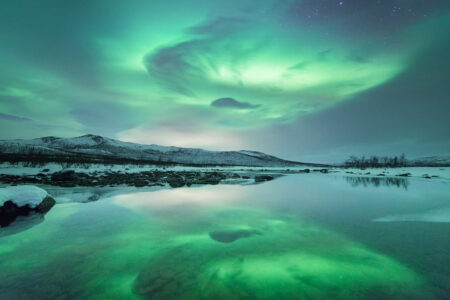
When most people picture a Northern Lights holiday, they think of deep snow, frozen forests and the middle of winter. But some of the most memorable Aurora experiences happen before winter has properly begun.
Early autumn, particularly September and October, brings together darkening skies, milder temperatures, quieter destinations and landscapes still filled with colour. For travellers looking for a Northern Lights holiday with more freedom to explore during the day, it can be one of the best times of year to visit the Nordics.
The First Northern Lights of the Season
There is something particularly exciting about seeing the first Auroras after the bright Nordic summer.
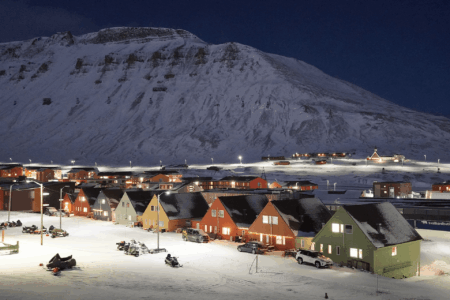
As darkness gradually returns to Norway, Sweden, Finland and Iceland, the Northern Lights become visible again. By September, nights are long enough in many northern locations for Aurora displays to appear, while the days remain relatively mild.
It feels like the beginning of something. Lodge teams begin watching the skies again, Aurora forecasts return to daily conversation and evenings are spent looking north as darkness settles across the landscape.
For us, those first displays of the season are always special.
Aurora Reflections on Lakes and Fjords
One of the biggest differences between autumn and winter is the landscape beneath the Aurora.
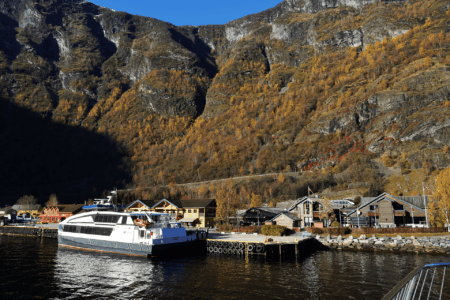
Before lakes freeze and snow covers the ground, calm water can create incredible reflections of the Northern Lights. A green arc moving across the sky can be mirrored almost perfectly in a still lake, while sheltered fjords can reflect both the Aurora and the surrounding mountains.
It creates a completely different atmosphere from winter.
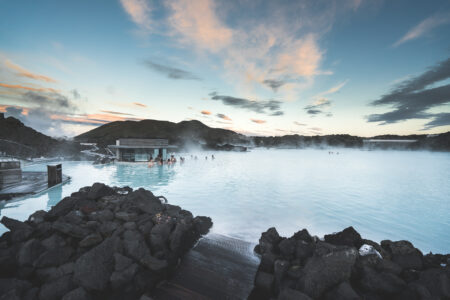
In Swedish and Finnish Lapland, autumn colours can still cover the forests in shades of gold, orange and deep red. In Norway, fjords remain open and easily explored, while Iceland’s waterfalls, volcanic landscapes and lagoons can be enjoyed without the coldest winter conditions.
Warmer Evenings Beneath the Aurora
Autumn also makes waiting for the Northern Lights considerably more comfortable.
Temperatures vary enormously across the Nordics, but September and early October are generally much milder than the depths of winter. You can spend longer outside without battling extreme cold and enjoy evenings around a fire, beside a lake or overlooking a fjord.
It is particularly appealing if seeing the Northern Lights is high on your list but temperatures well below freezing are not.
You still experience the excitement of watching the sky change overhead, simply in a softer season.
More Ways to Explore During the Day
Without deep snow, autumn opens up an entirely different collection of Nordic experiences.
You might kayak across calm Arctic waters, hike through forests filled with autumn colour, join a quiet fjord cruise, forage for seasonal berries and herbs or explore by bike.
Food is also a wonderful part of an autumn journey. Seasonal ingredients are appearing in kitchens across the region, from berries and mushrooms to local fish, game and produce gathered from the surrounding landscapes.
Rather than travelling purely for the Northern Lights, the Aurora becomes the finale to days already filled with experiences.
Fewer Visitors and Quieter Places
Early autumn sits outside the busiest winter travel period, which means many destinations feel noticeably calmer.
Hotels are quieter, trails are less crowded and experiences can feel more personal. There is space to slow down and enjoy the landscapes rather than moving between busy winter attractions.
For couples celebrating an anniversary, planning a proposal or simply wanting time away together, that quieter atmosphere can make an autumn Aurora holiday feel particularly special.
Is Autumn the Best Time to See the Northern Lights?
There is no single perfect month for the Aurora. Every season offers something different.
Winter brings snow covered landscapes and classic Arctic adventures. Spring offers longer days and lingering winter scenery.
But early autumn gives you something neither can quite replicate.
Dark skies return while the landscapes are still open and colourful. Lakes remain unfrozen. Days are warmer. Visitors are fewer. And somewhere above you, the first Northern Lights of a new season are beginning to appear.
For us, that combination makes an early autumn Aurora very difficult to beat.