The Summer Solstice arrives this weekend, marking the longest day of the year in the Northern Hemisphere and an important turning point in the annual cycle of the Arctic skies.
For many, the solstice is a celebration of summer. Across the Nordic countries, communities gather to embrace the season, enjoying long evenings, outdoor festivals and the peak of the year’s natural beauty. Yet for Northern Lights enthusiasts, the Summer Solstice signals something else entirely. It marks the moment when the countdown to the return of the Aurora Borealis truly begins.
While the difference is almost impossible to notice at first, every day after the Summer Solstice becomes slightly shorter. The long summer days that dominate the Arctic landscape gradually begin to retreat, and with them comes the slow return of darkness. It is this return of darkness that makes the Northern Lights visible once again.
Why the Summer Solstice Matters for Aurora Hunters
The Northern Lights are active throughout the year. Solar particles continue to interact with Earth’s magnetic field regardless of the season. The reason auroras disappear from view during summer is not because they stop occurring, but because there is simply too much daylight to see them.
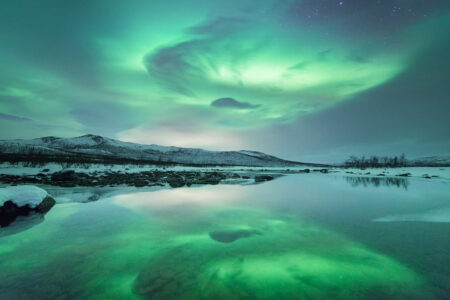
Dark skies are essential for witnessing the vibrant greens, purples and reds of the Aurora Borealis. Throughout June and July, much of the Arctic remains too bright for aurora viewing. However, once the Summer Solstice has passed, the gradual shift towards autumn begins.
For travellers dreaming of seeing the Northern Lights, this weekend represents the first milestone on the journey back to aurora season.
When Will the Northern Lights Return?
The first Northern Lights sightings of the new season typically occur during late August across the most northerly destinations in Norway, Sweden and Finland. As darkness returns to the Arctic skies, guides and photographers begin watching for the first displays after the summer break.
By September, aurora season is firmly underway.
Many experienced Northern Lights travellers consider September and October among the very best months to visit. The nights are becoming darker, temperatures are often milder than in winter, and the landscapes are transformed by the rich colours of Arctic autumn.
Lakes and fjords can remain ice free, creating beautiful reflections of the aurora, while forests across Finnish and Swedish Lapland glow with shades of gold, orange and crimson.
Why Autumn Is One of the Best Times to See the Aurora
Although winter often receives the most attention, autumn offers several advantages for Northern Lights viewing.
The weather can be more comfortable for outdoor excursions, daylight hours still allow visitors to enjoy activities during the day, and accommodation availability is often better than during the busiest winter months.
September is also traditionally associated with strong geomagnetic activity around the autumn equinox. While no aurora sighting can ever be guaranteed, this period has long been regarded as one of the most promising times of year for Northern Lights displays.
For photographers, autumn provides a particularly attractive combination of dark skies, colourful landscapes and relatively accessible conditions.
Looking Ahead to Aurora Season 2026
Interest in the Northern Lights remains exceptionally high as we continue through an active period in the solar cycle. Recent seasons have delivered spectacular displays across the Arctic, and anticipation is already building for the months ahead.
As the Summer Solstice passes and the days slowly begin to shorten, attention naturally turns towards the first aurora forecasts of late summer and early autumn.
The longest day of the year is often viewed as the height of summer, but for Aurora Borealis enthusiasts it is also the start of a new countdown. Every sunset that follows brings us one step closer to the return of dark Arctic skies and the magical first Northern Lights of the season.
Autumn may still be a few months away, but the journey towards the Autumn Aurora season starts now.