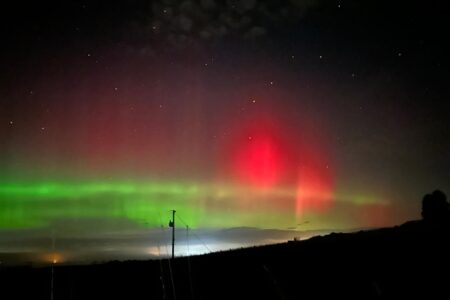
The spring equinox marks a rare moment of balance in the Earth’s orbit, when day and night are almost equal in length across the world. Taking place in March, it signals the shift from winter into spring, bringing longer days, softer light and a gradual warming of the landscape. In the Arctic, however, this transition is not only about the changing season. It also coincides with one of the most rewarding times to witness the Northern Lights.
As the equinox approaches, the extreme contrasts of winter in the far north begin to ease. The long polar nights shorten, yet darkness still lingers for many hours after sunset. Snow covered landscapes start to soften and melt, revealing a more varied terrain beneath, while frozen lakes and rivers begin their slow transformation. This creates a striking environment where winter and spring exist side by side, offering both atmosphere and accessibility for those travelling in search of the aurora.
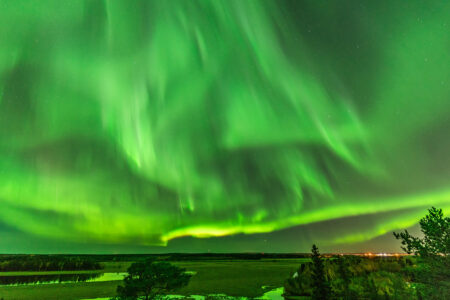
What sets the equinox apart is its relationship with geomagnetic activity. During this period, the interaction between the Earth’s magnetic field and charged particles from the sun becomes more pronounced. This increases the likelihood of auroral displays, often resulting in brighter, more dynamic and more frequent sightings. For those hoping to experience the Northern Lights at their most active, the weeks surrounding the spring equinox are widely regarded as one of the best times to travel.
For Aurora Nights guests, this seasonal window offers a carefully balanced Arctic experience. Days are long enough to enjoy time outdoors, whether exploring snow covered forests, travelling across frozen terrain or simply taking in the vast and peaceful surroundings. The quality of daylight at this time of year is particularly striking, with low angled sun casting long shadows and a soft golden glow across the landscape. It is a setting that feels both calm and full of quiet anticipation.
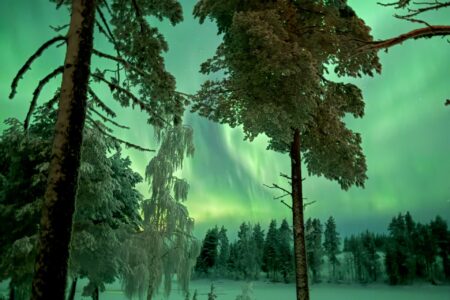
As night falls, attention turns to the sky. The lingering darkness provides the perfect backdrop for aurora viewing, while the increased geomagnetic activity enhances the chances of a memorable display. Watching the Northern Lights appear is never a predictable experience, but during the equinox period the odds are strongly in your favour. Clear skies, minimal light pollution and expert guidance all combine to create the ideal conditions for witnessing this natural phenomenon.
Another defining feature of travelling at this time is the sense of transition. The Arctic is no longer in the depths of winter, yet it has not fully emerged into spring. This in between state gives each experience a unique character. You may find yourself standing on crisp snow under a sky filled with stars, while hints of the coming season are already visible in the air and light around you. It is a reminder of how quickly the Arctic changes, and how fleeting these moments can be.
Destinations across northern Scandinavia and the wider Arctic circle come into their own during the equinox. Remote lodges, glass roofed cabins and carefully chosen viewing locations allow guests to stay close to nature while enjoying comfort and seclusion. Away from artificial light, the night sky feels vast and uninterrupted, offering the best possible stage for the aurora to unfold.
The spring equinox is more than a date on the calendar. It is a turning point, a moment when the balance of the natural world becomes visible. In the Arctic, it also marks a peak in the rhythm of the Northern Lights. For those travelling with Aurora Nights, it is an opportunity to experience this balance first hand, where shifting landscapes and active skies come together to create something truly unforgettable.